Resource File Parser Review for Release Teams
September 18, 2026
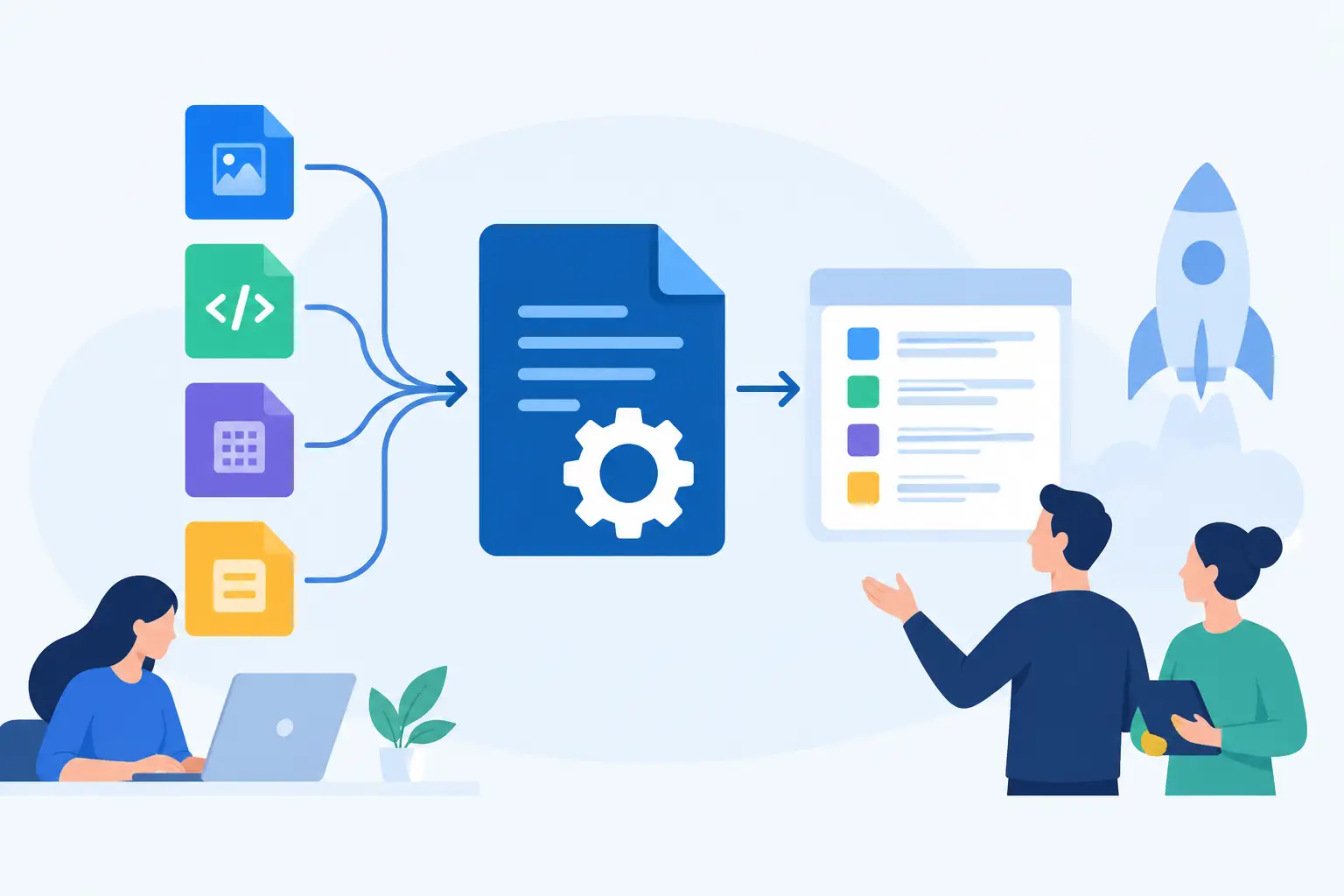
A parser failure rarely looks like a parser failure at first. It appears as a missing label in a dialog, a broken ICU plural message in production, an invalid mobile package, or a build that generates files but silently drops translator comments. A disciplined resource file parser review examines whether localization files can move through scanning, translation, validation, and deployment without changing the application’s intended behavior.
For engineering and localization teams, parser capability is not a checkbox on a format-support list. The relevant question is whether the parser understands the format deeply enough to preserve the details your build, translators, and runtime depend on.
Resource File Parser Review: What to Evaluate
A useful review starts with format fidelity. Parsing a file means more than extracting visible strings. A production parser must identify translatable content while retaining the syntax, structure, metadata, identifiers, context, and nontranslatable values required to write a valid output file.
Consider a .resx file, an Android XML resource, a JSON language file, an XLIFF document, or a web template. Each may contain keys, placeholders, markup, comments, references, character encodings, plural definitions, and values that should never be sent for translation. A tool that treats every quoted value as a string may produce a translation project quickly, but it can also create invalid or misleading output.
Review the parser against the exact versions and conventions used in your repositories. “Supports JSON” is not enough if your product uses nested objects, custom naming rules, JSONC comments, escaped markup, or values shared with configuration logic. “Supports XML” is similarly broad. XML-based Android, .NET, Java, and documentation formats have different localization semantics even when their syntax is superficially similar.
Extraction Must Preserve Context
The parser should capture enough context for a translator or reviewer to make a correct decision. A key such as `Save` can be a button, a menu command, a noun, or a status message. File path, resource identifier, developer comments, group location, screenshots, and visual context all reduce ambiguity.
Context preservation also affects technical accuracy. If a string includes `{0}`, `%s`, `{{name}}`, or ICU message syntax, the localization environment needs to identify those elements as protected or validate them explicitly. The parser should distinguish code-like tokens from ordinary text rather than relying on translators to notice every placeholder manually.
Pay particular attention to markup. HTML fragments embedded in JSON, XML tags within resource values, Markdown in documentation files, and rich-text controls in desktop resources require different handling. The desired result is not merely readable translated text. It is output that retains tags, attributes, entities, and nesting in a form the target runtime accepts.
Round-Trip Output Is the Real Test
Extraction is only half the operation. The strongest parser test is round-trip generation: scan the source, create translation targets, apply translations, and compare the generated files with expected output.
A capable parser preserves what it does not own. It should retain comments, ordering where it matters, whitespace rules, BOM and encoding settings, namespaces, custom attributes, and source-format conventions. Some differences are harmless, such as normalized indentation in a format where whitespace is irrelevant. Others create noisy diffs, fail schema validation, or make code review needlessly difficult.
Test generation with strings that expose common edge cases: apostrophes, double quotes, ampersands, emoji, right-to-left text, line breaks, escaped characters, long values, and plural forms. Include translated strings that expand significantly. German, Finnish, and Russian can reveal layout and length assumptions, while Arabic and Hebrew reveal bidirectional rendering issues that extraction alone cannot detect.
Verify Format Depth, Not Format Count
A broad supported-format inventory matters because modern products rarely store localizable content in one resource type. Desktop applications may combine .resx, WPF XAML, installer resources, help files, and spreadsheet exports. Web platforms may combine TypeScript, JSON, YAML, HTML, CMS exports, and API-delivered content. Mobile products may use Android XML, iOS strings files, storyboard content, and server-side messages.
But a high format count has value only when each format receives purpose-built handling. During a resource file parser review, ask whether the tool recognizes framework-specific rules. Can it differentiate an Android `string`, `plurals`, and `string-array` element? Does it handle .NET resource identifiers and comments? Can it identify localizable properties inside XAML or visual forms without extracting layout-only values? Does it support the target document format without flattening its structural meaning?
This is where generic conversion pipelines often become expensive. They may work for simple files, then require custom scripts, manual cleanup, or format-specific exceptions once the product grows. Those exceptions become release risks because the people who understand them may be different from the people who run localization.
A dedicated localization platform such as Soluling is designed around format-aware scanning and generation across more than 100 file formats. For teams with mixed application, document, and structured-data repositories, that depth can reduce the number of custom extraction paths that must be maintained over time.
Test the Parser Inside the Delivery Workflow
A parser should be evaluated in the environment where it will run, not only through a desktop demonstration. If localization is part of continuous delivery, the parser needs predictable command-line or build-server execution, stable configuration, useful logs, and failure behavior that engineers can act on.
Run the review against a representative branch and include incremental changes. Add a new string, rename a key, remove an obsolete resource, alter a placeholder, and change a source file encoding. Then inspect how the tool handles each event. It should detect new content accurately, preserve existing translations when identifiers are stable, flag obsolete content appropriately, and avoid treating insignificant source changes as thousands of new translation units.
The project configuration should be reviewable and repeatable. Teams need to know which folders are scanned, which file patterns are included or excluded, which languages are generated, and where output files are written. Hidden local settings create fragile pipelines. A configuration that can live with the project and execute consistently on a build agent is easier to audit and maintain.
Security is also operational. Many software companies cannot upload source files or unreleased content to an external service. Local scanning and build-server generation keep source code and resource repositories under the organization’s control while still allowing translations, translation memory, terminology, and machine translation to be managed through an appropriate workflow.
Make Validation a Release Gate
Parsing creates the conditions for validation, but validation determines whether translated output is safe to ship. Review which checks run before generation and which checks run against generated resources.
At a minimum, the tool should detect missing translations, inconsistent placeholders, invalid markup, duplicate keys, truncated values, and invalid target syntax. More mature workflows also check terminology, length constraints, accelerators, capitalization rules, and repeated translations. These checks are particularly valuable when the source format allows syntactically valid output that is still wrong for the product.
Validation must be configurable. A missing translation may be a build-breaking error for a release language but an acceptable warning for a language still in development. A duplicate key may require an immediate failure, while an overlength warning may require visual review rather than automatic rejection. The goal is not to stop every build. It is to stop defects that would otherwise reach customers.
Use real examples from prior defects when testing rules. If a release once failed because `{count}` became `{counts}`, add that pattern to the acceptance set. If an XML entity was double-escaped, test it. A parser review becomes much more valuable when it measures protection against failures your organization has already experienced.
Evaluate Translator Usability Without Sacrificing Control
Developers need correct files; translators need clear, usable units. Both requirements are connected. Poor extraction forces translators to work around keys, markup, and missing context, which increases review cycles and technical defects.
Inspect the translation workspace produced from parsed files. Are source comments visible? Are placeholders clearly protected? Can translators see terminology matches and translation memory suggestions? Can reviewers identify changed source text and distinguish it from unchanged, previously approved content? For visual resources, can the team validate text in context rather than guessing from an identifier?
There are trade-offs. Aggressive automatic segmentation can increase translation-memory reuse but split sentences that need to be understood together. Strict parser rules can protect syntax but may mark legitimate content as invalid when formats use unusual conventions. The best configuration reflects the product’s actual resource patterns and is adjusted through measured feedback, not assumed defaults.
Treat parser acceptance as a release engineering decision. Maintain a small but demanding test corpus, run it whenever parser versions or project rules change, and require generated output to pass the same build and application tests as source resources. That practice gives teams a practical standard: translations are ready when they are linguistically approved, structurally valid, and deployable without manual repair.